Category Archives: New Homes

Latest new home news and views from the New Home Expert

Bricklayers pay up 20% in six months

Bricklayers’ pay has surged 20% in the past six months as housebuilders struggle to keep up with a surge in demand for homes created by the Government’s ‘Help to Buy’ scheme. Greg Fitzgerald, chief executive of house builder Galliford Try said, “I have evidence of us paying bricklayers 20% more than six to nine months ago. Pretty much, since Help to Buy on April 1, we have gone from an environment where if you made a mistake on a job and needed twice as many brickies you would just go and pick them up to a completely different ball game. We can see build inflation starting to come through for the first time in four or five years.”

P1000442The current trade shortfall comes after many workers left the building industry during the recession as fewer homes were being built. House builders also slashed prices they paid to building workers by a third, virtually overnight, as the financial crisis hit.

Continue reading

Share this:
Share this page via Email Share this page via Stumble Upon Share this page via Digg this Share this page via Facebook Share this page via Twitter

Evidence that Help to Buy is helping house builders more than buyers

The larger listed house builders have reported accelerated demand for their new David Wilson Homes Sold Boardhomes, with sales, reservations and profit considerably higher so far this year. First half forward reservations are up an average 36% on the same period last year with average revenues and profits are up 13% and 40% respectively. 

Bovis Sales OfficeHelp to Buy has without doubt significantly contributed to the increase in reservations since it was introduced in April, with around 12,500 homes reserved as a result of the scheme, accounting for around a quarter of each house builder’s sales so far this year. 

Barratt CEO Mark Clare said recently: “We have had people coming at 4am for a 9am start and have many examples where our sales teams have arrived to find a dozen or so people waiting. We are starting to see queues, which is not something we have seen for years. And we are also seeing people buying off plan, which we have not seen for five or six years.”  

Continue reading

Share this:
Share this page via Email Share this page via Stumble Upon Share this page via Digg this Share this page via Facebook Share this page via Twitter

Why the UK is not building enough new homes

Following the Second World War, house building in England increased to reach a peak of around 352,000 in 1968. As the population has grown and households shrinking since the 1970s, Britain has not built enough new homes. It is generally agreed that around 250,000 new homes are required each year. However a little over 100,000 are actually being built. Even with the taxpayer funded Help to Buy subsidy, it is unlikely that the number of extra new homes built in 2013 will be more than 30,000, with a total of just 74,000 new homes bought using the scheme. 

barratt homeBritain’s private house builders have never built more than 200,000 homes in any one year so are not equipped to build 150,000 more than they currently do to fully meet demand. In the housing boom years in the late 60s, 40% of new homes were built by councils. 

House builders sitting on 400,000 plots, yet they blame difficulties in gaining planning permission, the green belt and all sorts of other restrictions for the shortage of new homes being built. Even this week, representatives from the larger house builders, Barratt, Taylor Wimpey and Persimmon met with housing minister Mark Prisk to push for even further relaxation of regulations and planning controls in return for increasing their output. This forgets the fact that 83% of major housing applications are approved. This figure would be higher if developers came forward with better schemes that paid more attention to local planning guidance and constraints

Share this:
Share this page via Email Share this page via Stumble Upon Share this page via Digg this Share this page via Facebook Share this page via Twitter

Rules regarding house builder’s yellow ‘direction’ development signage

Many of the County Councils adopt the following practice for approving the yellow signs for new housing developments and it is on the basis and understanding that the signs are temporary to direct contractors or potential buyers.Builders road sign

 Rules regarding house builder’s yellow direction signage:

  • The development must have a minimum of 30 bedrooms on site (10 x 3 bedroom houses or 6 x 5 bedrooms).

  • All development direction signs must comply with the requirements of diagram 2701 or diagram 2701.1 in the seventh schedule to The Traffic Signs Regulations and General Directions 2002. The maximum “x” height for the sign legend is 50mm and at least 2.1 metres headroom must be left below any signs that overhang a footpath.

  • Only the name of the development site is permitted on the sign – not the builder or developer name.

  • Sign locations should be limited to local area only, from nearest A or B road (depending on location and complexity of road network), with no more than two strategic road junctions. This can be subject to negotiations depending on the size of the development and potential impact on the road network.

  • The house builder is responsible for the manufacture, installation, maintenance and removal (and all costs involved) of all such signs.

  • County Councils require that the applicants hold a minimum of £10million public liability insurance in respect for works being carried out on the highway.

  • Signs may be erected only when works begins on the site substructures and must be removed within three months of the sale of 80% of the development or within 6 months of completion of construction, whichever is sooner.

  • No signs should impede the visibility of another sign on the highway or that of drivers.

  • It is the applicant’s responsibility to gain permission from the Highways Agency for signs erected on any trunk roads.

  • It is the applicant’s responsibility to gain permission from the electricity board to erect any signs on lamp columns with the correct fixings.

The authorisation of temporary development signing is done on a case by case basis and records of their approval should be held on file. The purpose of these signs is to aid the navigation of construction traffic as well as potential buyers. County Councils work with District and Boroughs to remove non-approved signing from their highway network. Development signing is also inspected as part of the ‘highway asset’ on cyclical inspections by the County Council Highway Inspectors. The authorisation of house builder’s directional signage has never been subject to any charge, however it is something that is being looked at by councils at the moment.

If you know of any house builder’s directional signage that does not comply with the above guidance rules, please inform your local County Highways Department. They would also be interested in the location of any old signs so they can check for authorisation and arrange for removal.

Share this:
Share this page via Email Share this page via Stumble Upon Share this page via Digg this Share this page via Facebook Share this page via Twitter

House builders kick back against proposed minimum space standards

Unsurprisingly the house building industry has already declared its opposition to the proposed minimum space standard for all new homes included in the Government’s consultation on streamlining housing standards by “Inviting views on minimum space and access standards that would allow councils to seek bigger homes to meet local needs, including those of older and disabled people”.

barratt homeBoth the Royal Institute of British Architects and the National Housing Federation have supported the idea for a minimum space standard, whilst house builders claimed that this would result in fewer homes being built and even higher prices.

Ashley Lane, group partnerships director at Persimmon, said…. “We are opposed to space standards. We believe demand should be market driven. The implication of a space standard is it would enlarge homes, so require more land. It would lead to fewer homes per area – particularly on publicly funded land.” 

There is a need to “enlarge homes” as new homes in the UK are the smallest in Western Europe often so small and dark they can actually be detrimental to occupant’s health. People are buying what is available, not necessarily what they would prefer.

John Slaughter, director of external affairs at the Home Builders Federation, said unsurprisingly that he welcomed the Government’s aim to tackle red tape, but believes….. “Minimum space standards, which run counter to these efforts, would be very damaging. Introducing minimum sizes will make homes more expensive and remove choice for consumers, especially those struggling to afford a home, and it would have an adverse effect on overall housing supply at a critical time.”

So whilst reducing regulatory red tape for house builders is good, forcing them to build larger homes is bad and will remove choice? The choice now is between small and very small. Minimum space standards would improve choice. Limiting the supply of new homes by land banking is the main contributor to higher prices. Bigger homes would be more expensive to build due to increased land and build costs but not so high as to have a noticeably adverse effect on the market. It is far more likely to adversely affect the house builder’s profit margins, as new home prices would have to compete with the general market at the time.

It is surprising that the house building industry didn’t also suggest that minimum space standards would result in more pressure on the green belt and the countryside. Especially in the light of recent CPRE statements regarding the increase of planning approval on Green Belt land. Perhaps they didn’t want to draw attention to this!

Share this:
Share this page via Email Share this page via Stumble Upon Share this page via Digg this Share this page via Facebook Share this page via Twitter

Berkeley boss Pidgley blames planning for lack of new homes

You would think that the Conservative led Coalition Government, the ‘house builders friend’, has already done enough for the house building industry during this parliament.  
OLYMPUS DIGITAL CAMERAIt began with schemes such as NewBuy, FirstBuy and HomeBuy being introduced to boost the new homes market. Currently the £3.5bn state subsidy for the house building industry, the ‘Help To Buy’ scheme, is enabling house builders to achieve record profits by selling overpriced new homes to buyers who cannot afford them without ‘help’ from the government, chipping in 20% of the purchase price.

In addition, ‘Funding for Lending’ is giving lenders access to cheap money, resulting in over 10,000 different mortgages for home buyers to choose from – up 33% on a year ago. With ‘Help to Buy’ (2) the state-backed £130bn mortgage indemnity for lenders due in January 2014, borrowers and house builders have never had it so good.

Can I have some more

When will greedy house builders stop asking for more help?

There have even been calls for the relaxation of various planning rules including the requirement to include a percentage of social or ‘affordable’ homes on each development. David Cameron claimed a year ago that developers were being “held back” by the “many obligations” placed on them to build affordable housing. He said “under the government’s plans, if developers can prove these requirements make a site not commercially viable, the conditions will be removed”.

The National Planning Policy Framework has introduced a “positive approach” that reflects the “presumption in favour of sustainable development, working proactively with applicants jointly to find solutions which mean that proposals can be approved wherever possible.” Planning applications that accord with the policies of the Local and neighbourhood plans will be “approved without delay.”

It has never been easier for house builders to obtain planning permission.

Tony PidgelyBut all of this is not enough for Tony Pidgley, chairman of Berkeley Group. He is blaming the planning system for his industry’s abject failure to increase the number of new homes currently being built in the UK. This despite the fact that 83% of major housing applications are approved. The figure would be even higher if developers submitted better schemes that paid more attention to local planning guidance and constraints.

Pidgley claims: “Planning remains complex and obtaining planning consents involves consulting widely with multiple stakeholders. This causes delays to planning decisions and an inconsistency of approach at a local level, despite the National Planning Policy Framework and the presumption in favour of sustainable development. This remains a hurdle to the industry being able to increase substantially the supply of new homes.”

OLYMPUS DIGITAL CAMERAHis company Berkeley, has a landbank of around 25,700 plots, around seven-years’ supply at the current build rate. In his company’s a trading statement covering May to August, the builder confirmed it had added a 10 acre site in White City and a site in Battersea to its landbank and confirmed plans to acquire further sites in Hornsey and Southall. The majority of the homes the company builds are high value apartments in London, which are unlikely to help solve the national housing shortage. Berkeley’s average selling price is £354,000, the highest of any listed house builder and nearly twice the average of rivals Persimmon and Taylor Wimpey. 

Planning rules and restrictions prevent a developer free for all, stopping them from doing what is the most profitable and forcing house builders to adapt their applications that often result in a reduction of their profits. Most planning rules are fully justified, well intended and for the protection of local communities

Housebuilders continue to hoard their planning approved landbanks, building just enough to force prices higher with corresponding rises in profits and share prices. The Local Government Association released figures that show over 400,000 prospective homes that have planning permission have yet to be started. It says these “conclusively prove” the planning system is not holding back the construction of new homes. It also confirmed developers put in 5% fewer planning applications last year and were taking longer to complete work on site, with the longest taking nine years from permission to the homes being built.

It could be said that house builders are hoarding plots to limit availability to maintain prices. The 14 largest house builders have a combined landbank of 342,850 plots. Considering they built just 60,294 new homes between them in 2012/13 they have nearly six-years’ supply of plots with planning approval. There are calls for new rules to force builders to develop sites earlier, by either losing the permission or being forced to sell the land.

Share this:
Share this page via Email Share this page via Stumble Upon Share this page via Digg this Share this page via Facebook Share this page via Twitter

Help to Buy – builder dividends to shareholders rise 50%

‘Help to Buy’ more like ‘help to profit’ as house builders clean up, taking full advantage of the taxpayer-funded scheme subsidising new home buyers. According to Markit, a provider of financial information services, it expects dividends from seven of the main UK listed housebuilders to rise by 90 per cent this year with payouts totalling £285m, thanks to the Help To Buy scheme which now accounts for 20% of housebuilder’s sales. OLYMPUS DIGITAL CAMERA

A Markitt spokesperson told the Financial Times:

“The outlook for UK homebuilders has improved since the beginning of the year with companies reporting an increasingly buoyant trading environment, supported by the Help to Buy scheme,” “This has driven improved profitability and higher margins. The resulting positive cash-flows are flowing into improved returns to shareholders as companies outline plans to resume or increase payouts.”

Help To Buy jpgBoth Bovis and Persimmon have increased their interim dividends by 33%. Bellway has gone further with an interim dividend 50% higher than last year.

The housing bubble has already been created, as prices for new homes rose on average 7% in the last 12 months, twice that of older homes.  Mortgage approvals are also up with the Bank of England figures released 30 August 2013, showing mortgage approvals in July, had risen to their highest level since the financial crisis in March 2008. Recent figures released by Nationwide stated that house prieces rose 3.5% in the year to August.

cropped-help-to-buy.jpg

Sooner or later every bubble will meet its pin! Until then, house builder and their shareholders should not be allowed to profit at the taxpayer’s expense. A windfall tax must be levied on excessive builder profit from ‘Help to Buy’ scheme.  George Osborne should include this in his Autumn budget statement.

Share this:
Share this page via Email Share this page via Stumble Upon Share this page via Digg this Share this page via Facebook Share this page via Twitter

Completion inspections not carried out on at least 24 new homes.

OLYMPUS DIGITAL CAMERAThe Oxford Mail recently reported that David Wilson Homes built 678 new homes on their Shelton Park development in Carterton between 2002 and 2005, but as yet, an “unknown number” of new homes had not been inspected after they were completed. These homes were built before the Barratt £2.7bn acquisition of David Wilson Homes in April 2007.

A spokeswoman for David Wilson Homes said the company was working with the district council to ascertain how many properties do not have a completion certificate, but added that it was anticipated this would be a “relatively low number”. 

To comply with the Building Regulations, all house builders are required to get final inspection completion certificate for every new home constructed and before anyone moves in. The building inspector should be asked to inspect each home on completion, to ensure it has been built to the required building regulations. An inspection ‘CML’ certificate is normally required before mortgage funds are released. Owners without a completion certificate would not be able to sell their homes if they ever chose to.

Building inspectors from West Oxfordshire District Council have now been brought in to inspect the houses and faults have been found in 24 houses so far concerning chimneys, windows and ventilation.

Simon Kirk, David Wilson Homes (Southern) technical director, said: “We are aware of outstanding issues at Carterton. We are working closely with West Oxford District Council to ensure that these issues are resolved.”

West Oxfordshire District Council spokeswoman Carys Davies said:  “Where we have identified issues, David Wilson Homes are implementing the remedial measures, agreed by the district council and the property owner, as quickly as possible so that a completion certificate can be awarded. We have identified 24 properties where works are required and discussions on remedial works are ongoing. This includes work to chimneys, windows and ventilation issues.”

Quite how final inspections could be “missed” on at least 24 new homes and mortgage funds released without a completion certificate for each property has yet to be explained by the organisation engaged to carry out the inspections or by David Wilson Homes Southern. Even more inexplicable is how the various solicitors appointed by the 24 new home buyers also failed to ensure that completion certificates had been issued before legally completing on each property.

This would appear to be an unprecedented catalogue of professional failure at many levels.

Share this:
Share this page via Email Share this page via Stumble Upon Share this page via Digg this Share this page via Facebook Share this page via Twitter

Why the government like rising house prices

House prices are rising and rising fast. Thanks to government interference via incentives, (Help to Buy) subsidies (Funding for Lending) and a pledge (albeit conditional) by Mark Carney to hold interest rates at 0.5% until after the general election, house prices are on the up as debt becomes affordable and everyone is happy again.

For sale board 1First time buyers are snapping up their first home in fear that prices will quickly rise beyond their reach, with cheap loans in the ‘safe’ knowledge that rates will not rise for 3 years. Existing homeowners feel wealthier as the value of their home increases and they are able to re mortgage, withdrawing equity perhaps for a holiday or a new car. After all, increasing a mortgage by £5,000 would require just £75 extra interest a year with repayments an extra £200 a year over 25 years. When you factor in inflation at 3.2% it is virtually free money so what’s not to like.

Rises in house prices are useless to the economy. Any increase in consumer spending comes from additional borrowing. House prices are not rising because of rising incomes or because prices have fallen too much, they a rising because of the state subsidies making debt more affordable.

House pircesWho are the real beneficiaries of rising prices? Existing home owners will only realise their gain if they downsize. Those who don’t own a home will see something they want but don’t yet have going up in price and becoming even more attainable. But estate agents are laughing all the way to the bank. They are normally paid a percentage of the selling price achieved. As prices rise, so do agent’s revenues as their costs remain unchanged.

imagesBut the real beneficiaries are the government. Stamp Duty is 3% on homes that sell for more than £250,000. Around 25% of homes sold in 2012 paid at least £7,500 in Stamp Duty. That percentage will increase as prices increase all the time the thresholds remain unchanged. A property firm is predicting that the ‘Help to Buy’ scheme will result in an extra £1bn in stamp duty tax revenues over the next four years.

Then there is Inheritance Tax. This is currently £325,000 and despite George Osborne’s pre-election pledge in 2007 to increase it to £1million, it has remained unchanged at £325,000 since 2009 and will not rise until at least 2019, resulting in an extra 5,000 estates handing over an additional £200million to the treasury. As house prices rise, even a modest family home will result in more estates being subject to Inheritance Tax. In 2011, just 19,000 estates incurred Inheritance Tax, equating to just 3% of all deaths.

If the government really wanted to stimulate the housing market without inflating prices and creating a bubble with the inevitable crash; abolishing stamp duty, capping estate agents fees at £3,000 with zero-rated Vat would be a good start. But that would reduce tax revenues not increase them.

Share this:
Share this page via Email Share this page via Stumble Upon Share this page via Digg this Share this page via Facebook Share this page via Twitter

House builders facing curbs on construction of ‘rabbit hutch’ homes

Housebuilders could be forced to design and build homes with larger rooms under proposals to end the current trend of “rabbit-hutch” cramped estates. On Tuesday communities minister Don Foster, is launching the space consultation, which in a trade-off for larger homes, will also reduce certain requirements imposed on house builders with up to 90 housing standards being scrapped and 1500 pages of guidance reduced to less than 80.

Mr Foster confirmed to the Financial Times that there were no regulations regarding minimum space standards in the UK, outside London. 

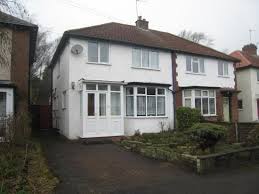
Typical small narrow small new UK homeA typical British new home is now nearly 50% smaller than a similar home built 80 years ago. In a relentless drive for ever higher profits, builders are reducing plot sizes and increasing densities, which has resulted in UK new homes being the smallest in Western Europe. Small dark UK new homes not only making us unhappy but can also make us ill. 

As the RIBA Case for Space notes the average UKTypical 1920's semi one bedroom flat is about the same size as an a London tube carriage. The average UK new home is just 818sq ft. New homes in Ireland have 15% more space and in Denmark, the average new home is 80% bigger than its UK equivalent.

It is well known for years that house builders have used tricks to give the impression the show homes are larger than they really are and developers have been forced to deny the practice. 

It is hoped that the consultation on minimum space standards will be viewed by as pay back for the Help-to-Buy bonanza that is creating record profits for house building industry from the taxpayer-funded subsidies. 

On Monday, Bovis reported first half pre tax profits up 20% year-on-year to £19m. A day later Persimmon reported a rise in pre tax profit of 40% to £135m. No doubt their 1700 Help to Buy reservations since the scheme was launched in April, contributed to the 7% year-on-year increase in legal completions. 

In March, Eric Pickles, the communities secretary, said families had been “trapped in rabbit hutch homes” due to density targets of at least 30 homes per hectare imposed by the previous Labour government. However he failed to acknowledge that it was the Thatcher government that abolished minimum space standards for new homes 1980. Many home buyers are being put off by the small size of new homes. 

According to a survey by the Royal Institution of British Architects (RIBA), in 1920, the average semi-detached new home had four bedrooms and was 1,647 sq ft. Today’s new build semi is a three bedroom house of just 925 sq ft. It is the same picture for terraced new homes which are now typically two bedroom and just 645 sq ft, 37% smaller than the three bedroom 1025 sq ft terraced home built in the 1920’s. 

Harry Rich, chief executive of RIBA, has welcomed the review. “Our public research has repeatedly revealed that space in new homes is a major concern, our surveys have revealed that 60 per cent of people who would not buy a new home said the small size of rooms was the most important reason.” 

The consultations will take place until 22 October 2013. Whether organisations representing the house builders such as the HBF agree and house builders increase the size of new homes, without increasing prices to maintain profit margins, remains to be seen.


Share this:
Share this page via Email Share this page via Stumble Upon Share this page via Digg this Share this page via Facebook Share this page via Twitter