Category Archives: New Homes

Latest new home news and views from the New Home Expert

What do the house builders really mean?

New home buyers will come across the same phrases and statements used by house builders’ to market their homes and when dealing with distraught new home buyers.   But what are the house builders really telling you?

show home blog

On marketing:

“Attention to detail”
If we can save a few pennies by not doing something and we can get away with it, we will.

“An exciting development”
We hope to make a lot of money on this site

“All of our staff are trained”
We have told them what they can and cannot tell you

“Our friendly site team”
The site manager is always in the sales office chatting and drinking coffee.

“Spacious interiors”
Larger than the usual rabbit-hutch new homes we buildMirrors in show home“Our sales team are fully trained to offer you expert guidance and practical assistance throughout the buying process”

Our sales staff will try to sell you optional extras and force our choice of solicitor and mortgage broker on you.

Continue reading

Share this:
Share this page via Email Share this page via Stumble Upon Share this page via Digg this Share this page via Facebook Share this page via Twitter

House builders react as Ed Miliband re ignites his land grab mandate

Ed MilibandIn a speech to the party’s national policy forum, Mr Miliband is set to confirm that increasing the number of new homes built each year will be a key priority for an incoming Labour government. He will confirm measures to force house builders to stop hoarding land with his “use it or lose it” proposal. 

Other options also being considered include giving councils the power to fine companies that own large areas of undeveloped land or to require them to pay council tax or a special “land tax” on the undeveloped land in question. As a last resort house builders who refuse to build could find themselves facing a compulsory purchase order.

Mr Miliband will say: “We have to be willing to confront some of the obstacles to house-building. Across our country there are firms sitting on land waiting for it to accumulate in value and not building on it – landowners with planning permission who simply do not build. We have to change that… permission to build should mean landowners build.” 

Mr Miliband recognises that the profits of the biggest four developers by volume – Barratt, Berkeley, Persimmon and Taylor Wimpey – have risen by 557% since the coalition took office. The number of homes completed by these firms increased by just 4,067 in 2012, and the number of affordable homes built last year actually fell by 26%. 

Continue reading

Share this:
Share this page via Email Share this page via Stumble Upon Share this page via Digg this Share this page via Facebook Share this page via Twitter

How the house builders could improve the quality of new homes

The standard and quality of new homes is not improving. Despite surveys and reviews, time and time again, house builders have demonstrated that they only care about profit and numbers. This was recently confirmed to a Taylor Wimpey new home owner last month, when the company’s regional director, visiting because the new home had over 400 faults including potentially dangerous electrical  work, said: “we’re here to deliver profit for our shareholders”   adding:  “we don’t build perfect houses”

OLYMPUS DIGITAL CAMERA

Remedial works cost builders money!

Indeed, many disappointed new homebuyers believe they should at least be forced to try to improve the quality of the homes they build!  The reality is, it wouldn’t be too difficult to do.  If there was a will, there is a way!  It certainly would be unlikely to reduce the house builders’ profitability because it always costs less to do the work right first time, than it does to go back over and over again.  All a successful business needs is great a product and satisfied customers. The house builders have neither, making their profit predominantly as a result of planning gain, land speculation and on the back of government initiatives such as New Buy and the Help to Buy subsidy!

Continue reading

Share this:
Share this page via Email Share this page via Stumble Upon Share this page via Digg this Share this page via Facebook Share this page via Twitter

Beware of buying a new home rushed for the house builder’s year-end figures

In the days of British Leyland, it was often said that a car with several faults was a “Friday Car” – meaning it had been built on a Friday, with workers not being quite as attentive to quality and what they were doing as perhaps they should have been. Fortunately, the car industry has come a long way since those days with both the quality and reliability of new cars much improved. 

However the same cannot be said of the house building industry. New homes are still being built with as many, if not more faults and defects than they were 20 years ago. The situation is even worse in an “end-of-year figures” new home. These are homes that are sold and the construction process rushed to enable legal completions to take place so as many homes as possible can included in the house builder’s financial year-end report to the City and shareholders. Homes built in the run up to the end-of-year date are always of inferior quality, even worse than the national house builders usually build, with a lower overall standard of finish, incomplete works and forced drying out causing excessive cracking to finishes. 

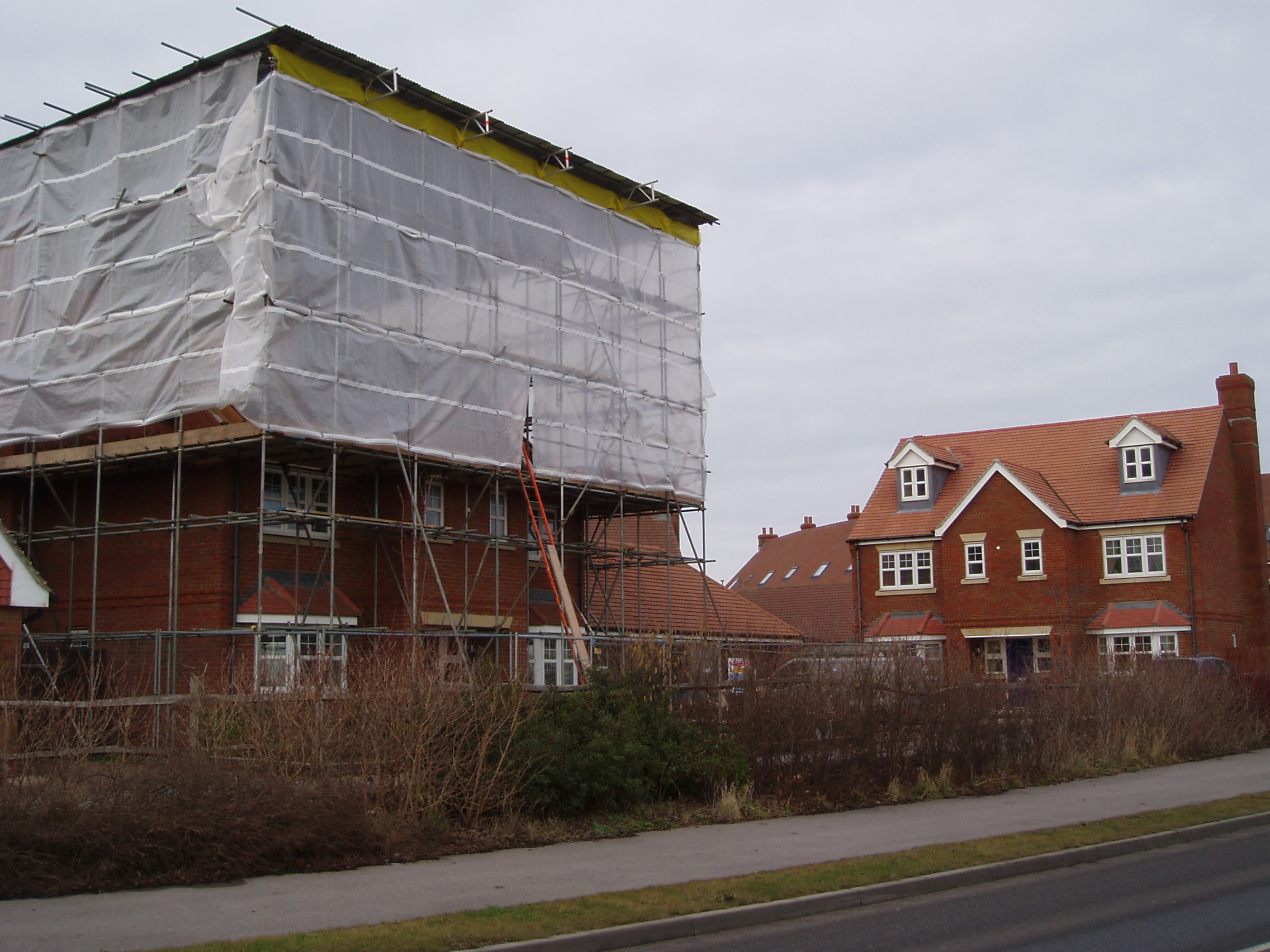
Rush job!  Will it be completed in time for you to move in 4 weeks?

Rush job! Will it be completed in time for you to move in 4 weeks?

Each regional office will report how many homes they have built and sold, within the company’s financial year. The overall total is then recorded in the firm’s final annual financial accounts. Each region is given a target number of completions to achieve each year and everything (and anything) is done to ensure the required figure is reached. In the past it has been known that buyers were handed large cheques by directors as a “sweetener” to persuade them to legally complete on their new home – even though it was nowhere near finished or even ready for occupation. It was not unheard of for buyers to move in with their electricity and heating powered by a temporary generator or their water supply provided from a hose connected to a standpipe in the footpath! Another ruse sometimes used when a part-exchange is involved, was to let the buyer remain in their old home whilst their new was being finished.  Quite frankly this practice was nothing short of fraud. 

Continue reading

Share this:
Share this page via Email Share this page via Stumble Upon Share this page via Digg this Share this page via Facebook Share this page via Twitter

Advantages and disadvantages of buying a show home

For many, buying the show home may seem a great idea. But anyone considering buying an ex show home should consider the many disadvantages as well as the perceived advantages.

Bovis Sales OfficeThe first thing to be wary of is to not getting taken in by the furnishings and the techniques the housebuilder has used. In recent times, many people have become obsessed with lifestyles and developers are using this to their advantage so potential show home buyers should be sceptical when viewing. 

The most critical issue to buyers is nearly always price. A show home can, and usually does cost, more than the same house type on the development, This is because all the little extras that are in the show home are added to the price. Remember house builders never give bargains! The price will have been very carefully considered to get the maximum amount that can be realistically achieved, in the short time the sales staff may be on the development. You should be prepared to negotiate with the builder, as you will have not been able to choose your kitchen and other options and the home will be used to some extent. 

Continue reading

Share this:
Share this page via Email Share this page via Stumble Upon Share this page via Digg this Share this page via Facebook Share this page via Twitter

Christmas comes early for house builders as government caves in

Ministers have caved in to pressure from the large house builders  and their trade body The Home Builders Federation (HBF) to lower standards, meaning councils will have no longer have power to require and impose stricter standards. This will result in many more small, insecure and unsustainable new homes being built in Britain.  

Instead of learning from construction best practice, the government has caved in, yet again, to pressure from “big housebuilding.” 

OLYMPUS DIGITAL CAMERAThe government’s main aim of the technical housing standards review was to strip out standards, rules and regulations that complicate the house building process. The RIBA had lobbied to force house builders to build bigger new homes via their ‘Case for Space’ campaign. Other initiatives included reducing carbon footprints, improving security, on-site renewable energy sources, and rainwater harvesting to reduce water consumption. Despite this, the brief has been used as an opportunity of further reducing the cost of building  new homes and stop local authorities from demanding certain conditions as part of the planning process. 

This was a lost opportunity to examine how the nation can build great homes for the next generation and beyond, requiring new homes to have proper security features, sustainability, access standards, and a reasonable and decent amount of space to live in. Instead we will now have the same cramped, over-developed housing estates with standardised small new homes being built up and down the country, lowering house builder’s operational costs and increasing, their profit margins even further. 

Continue reading

Share this:
Share this page via Email Share this page via Stumble Upon Share this page via Digg this Share this page via Facebook Share this page via Twitter

Are house builder CEOs fit for purpose?

Is the size, design and more importantly, build quality of new homes getting any better? Judging by the number of complaints they receive and various online comments the answer is a resounding NO! Only this week a Bellway Homes buyer was forced to move out of his house because it was declared structurally unsound after an incorrect (weak) mortar had been used. A Taylor Wimpey buyer could not move into his new home for TWO MONTHS because of the extent of snagging defects included potentially dangerous electrical installation. According to the unfortunate new home buyer, a Taylor Wimpey regional director even told him that “we’re here to deliver profit for our shareholders” adding: “we don’t build perfect houses”.

Whilst planning and building regulations stipulate minimum standards, it would appear that no house builder is prepared to go beyond the absolute minimum quality standards. When a new home buyer complains they are often referred to the NHBC’s booklet “A Consistent Approach To Finishes” and told that it is “within tolerance” The author has written to Persimmon’s Jeff Fairburn, and Taylor Wimpey’s Pete Redfern to ask what measures they are personally going implement improve the quality of their product. Neither has replied!

So with CEOs apparently only driven by profit and share prices, we thought it would be worth a look at examining whether those who are in charge of Britain’s largest plc house builders are in fact, fit for purpose. It can be seen that with one exception, they have not had a University education. In addition, only three have any experience of actually managing a building site, two of these actually started their own companies!

Continue reading

Share this:
Share this page via Email Share this page via Stumble Upon Share this page via Digg this Share this page via Facebook Share this page via Twitter

Mark Clare Barratt CEO wants even more help for house builders

Unsurprisingly, Mark Clare is a big fan of Help to Buy. In an interview with the Mail on Sunday he said:   “The ability to buy homes with a 5% deposit is creating confidence in the housing market after years of uncertainty going back to the financial crisis in 2008. We are seeing queues outside our showhomes”

Mark ClareClare 56, believes the market was already picking up, even before Help to Buy with demand being boosted by signs of a general economic recovery.   Barratt recorded a record 73.7% rise in underlying pre tax profit to £192.3 million in the year to the end June 2013. The average price for a Barratt (privately-sold) home also increased to £213,900. In their Interim Statement last week, Barratt confirmed sales are up by 47%. 

Mark Clare, a graduate from Portsmouth Polytechnic, has a background in accountancy. After 12 years at British Gas he joined Barratt as CEO in October 2006.  In April 2007  he oversaw the £2.7bn acquisition of Wilson Bowden, which included the David Wilson Homes brand – just a year ahead of the global financial meltdown and the total collapse of the housing market created by the ‘credit crunch’. The company’s share price collapsed from 954p in August 2007 to just 39.5 in less than a year.  A Rights Issue was required to raise additional funds from shareholders to keep the company afloat.    Not a great start in a new job was it? 

Continue reading

Share this:
Share this page via Email Share this page via Stumble Upon Share this page via Digg this Share this page via Facebook Share this page via Twitter

Help to Buy a helping hand to another house price bubble and crash

The coalition’s Help to Buy scheme is nothing short of taxpayer-funded electioneering. The only people who openly have a good word to say for it are politicians, house builders and estate agents. Everyone else can see it for the cynical disaster in waiting it is. With an election in 17 months time, the government is hell bent on helping house prices rise until then.  Any economic growth will be based on debt, as home owners feel better off due to rising property prices and start spending again – it is the same old story. But this time, it will be the British taxpayer left without a chair to sit on when the (low interest rate) music stops. 

P1000335Help to Buy (1) Equity Share, subsidises the cost of new homes by up to 20% and has even boosted the prices of older homes as it gave the market a psychological shot in the arm.   It is said that Help to Buy is only supposed to be a temporary measure, designed to help people buy a home until the banks start lending again, but the evidence is that they already are!   Help to Buy (2) Mortgage Indemnity, is not really needed, it will make very little difference to mortgage availability and does nothing except give the lenders an additional 15% comfort zone for potential losses on loans they would have given anyway, all at the expense of the taxpayer. 

Help to Buy (1) has resulted in house builders building more homes. Why wouldn’t they?   They have a ready supply of subsidised buyers, they are reporting record reservations and profits whilst increasing average selling prices, some by as much as 11% in the last 6 months, without any loss of demand. 

Continue reading

Share this:
Share this page via Email Share this page via Stumble Upon Share this page via Digg this Share this page via Facebook Share this page via Twitter

Redrow are whinging about planning conditions – again!

Earlier this week Redrow reported that the company is making “good progress” as a result of the Government’s Help to Buy scheme. Private reservations for the financial year to date are up 52% at 1,400 homes, with Help to Buy reservations representing 35% of total private sales over the period. The average selling price of private reservations is 11% up on the same period last year, at £271,000.  

Redrow reported that they have increased their current land bank, (land with a planning permission) both owned and contracted, by 2,000 plots to just over 15,000 plots in total – well over five years supply, based on their 2012 total completions. 

Despite this, Redrow used the interim management statement as yet another opportunity to lobby for a further relaxation in planning regulations and conditions. Whilst acknowledging that the growth in the company’s land bank over the last two years had been helped by the changes in the planning system, brought about by the NPPF, Redrow stated that over 5,000 plots are,

“in the planning system awaiting reserved matters approval or clearance of pre-start conditions. The regulatory burden involved in obtaining detailed permission and clearing conditions is the biggest constraint to the industry increasing production.”

Continue reading

Share this:
Share this page via Email Share this page via Stumble Upon Share this page via Digg this Share this page via Facebook Share this page via Twitter