Category Archives: New Homes

Latest new home news and views from the New Home Expert

Ultra low interest rates a stealth tax on savers creating a house price bubble

The country is £1.2trillion in debt. The national debt has tripled in the last 10 years and the cost of interest to service this debt is the fourth largest cost to the country, behind education, welfare and health. The interest payments on the national debt cost each of the 30 million UK taxpayers more than £1,650 a year. Yet this Chancellor appears to have “spare money” to give to house builders? In a little under a year, according to figures from the Home Builders Federation (HBF), 55,000 reservations have been made using Help to Buy. Now the scheme has been extended to 2020, at the current rate around 385,000 new homes could be sold using the Help to Buy state-subsidy. 

MoneyThe Bank of England interest rate has been stuck at 0.5% for five years now – the lowest rate for 300 years. Who has this benefited? The winners are – anyone with a mortgage they shouldn’t really be able to afford, companies looking for cheap debt and the government, which has been able to add to the national debt aided by the very low rates. Oh and those that own shares, especially house builders shares. 

Continue reading

Share this:
Share this page via Email Share this page via Stumble Upon Share this page via Digg this Share this page via Facebook Share this page via Twitter

HBF 2014 Customer Satisfaction survey results published.

The Home Builders Federation has recently released the results of the National New Home Customer Satisfaction Survey 2014. The first page of the “results” has been used by the HBF as an opportunity for a public relations promotion of new homes.   Crikey, they must be good!   Who would have known?

“High level of Homeowner satisfaction”   “Customer satisfaction levels for new homes have consistently been extremely high”

Barratt NHBF Star ratingQuite a claim considering that the results are from just 32,137 new home owners out of a total of the 109,370 new homes completed during 2013 – that’s just 29.4%!  Only 55% of the surveys sent out were returned – or used to compile the results!

We have the old chestnuts that new homes are “fresh, bright and clean” – another surprise given that new homes are normally dark due to fewer and smaller windows and small cramped rooms.  As for clean, many new homes are handed over in a terrible state after an ineffective builder’s clean.       “Blank canvas”  “better for the environment” – it’s all there,   it’s all good,  what’s not to like?

Continue reading

Share this:
Share this page via Email Share this page via Stumble Upon Share this page via Digg this Share this page via Facebook Share this page via Twitter

The Help to Buy madness is being extended by four years to 2020.

George Osborne has announced that the lunacy of his Help to Buy scheme for new-build homes is to be extended for a further FOUR YEARS to 2020,  less than a year after it was first made available. 

Help To Buy jpgThose keen on the stock market can watch today as builders share prices soar still further on this latest announcement. Already share prices of Bovis, Crest and Persimmon are up around 4.5%.  Remember this is taxpayer’s that are funding the five-year interest free loans, after we at least receive 1.75% on our money! This extension t0 the scheme will cost taxpayers a further £6billion! Also let us not forget that, at the same time, George Osborne is steadfastly refusing to raise the 40% income tax thresholds, despite calls from many in his own party as well as two ex-chancellors Nigel Lawson and Norman Lamont. Just over 1.7million paid the top rate threshold twenty years ago. Today that figure is 4.4million and is predicted to rise to 5million before the next election in 2015. 

Continue reading

Share this:
Share this page via Email Share this page via Stumble Upon Share this page via Digg this Share this page via Facebook Share this page via Twitter

Despite builder’s profits, not enough new homes are being built.

Despite housebuilder’s results  last week reporting an average  16% increase in the number of homes they had built during 2013, house building output is actually 11.3% below pre financial crisis levels. The number of new homes started in 2013 was 122,590, the highest since 2007. But this is still HALF the number experts say are needed each year to meet housing demand, let alone addressing the shortages from previous years. 

P1000442However, the number of new homes completed last year actually fell by 5% to 109,370. The Government’s schemes have not helped either, creating easier access to borrowed money  resulting in boosted demand rather than increased supply,  sending house prices soaring,  especially in the south. 

Home ownership has now fallen to its lowest level in 25 years. The number of people sleeping rough in England has increased by over 30% since 2010. The proportion of working households claiming housing benefit is now higher than 2010.  Hardly a success story Mr Cameron!  At the same time, the large plc housebuilder’s are returning cash piles generated from the record profit increases, to their shareholders.

Continue reading

Share this:
Share this page via Email Share this page via Stumble Upon Share this page via Digg this Share this page via Facebook Share this page via Twitter

House builders report profits double.

This week five national plc house builder’s reported record profit rises as they cash in on the state sponsored Help to Buy feeding frenzy. According to recent figures from the DCLG , 89% of the Help to Buy loans have gone to first-time buyers since the scheme began in April 2013. With an apparently never ending stream of undiscerning, naive first timers flocking to builder’s sales offices, buying whatever is available, what incentive do house builders have to improve quality of the homes they build? 

show home blog

Help To Buy jpgYou also have to question why the government is currently advertising it’s Help to Buy scheme on national television, when the figures released by these major national builders during this week demonstrate that this advertising is totally unnecessary.

Greed is good and greed is back, as both builder CEOs and their shareholders receive payouts from the excessive profits generated from the government’s Help to Buy subsidy.   New Home Blog saw this coming!

Builder’s report record profit increases – but not improving quality!

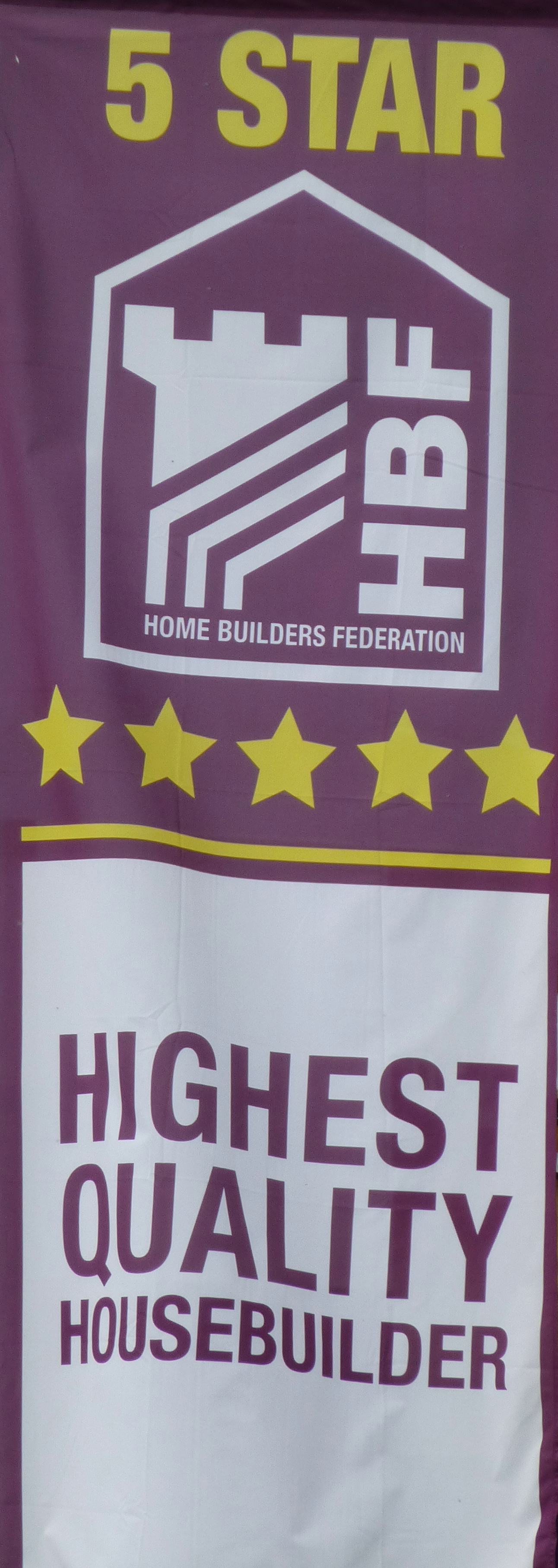
Here we go again: “Profitability, Cash generation, Completions, Average selling prices, Earnings per share, Land banking, Trading outlook”  yada-yada!     The only house builder to make any meaningful statement regarding a commitment to improving quality and customer service was Barratt, with reference to their consistent HBF  “customer satisfaction” 5-Star rating and their record 102 NHBC quality awards in 2013. 

Continue reading

Share this:
Share this page via Email Share this page via Stumble Upon Share this page via Digg this Share this page via Facebook Share this page via Twitter

Help to Buy scheme advertised on television.

“Dream of owning your own home but need a little help?”                       Not content with creating another housing bubble – Nationwide report house prices have risen 8.8% since January 2013 – HM government is now advertising its Help To Buy scheme on the television with a taxpayer-funded 30 second commercial.  You can see it here! 

Why?   Surely people who cannot afford to buy their own home, should not be persuaded to buy by the government?   It’s a bit like payday lending for home buyers. They know they cannot afford it but hey, the government is making it easy, so why not? 

Help To Buy jpgThe advertisement says the scheme is for “People who can afford a mortgage, but not a big deposit”   So it’s for people who cannot afford to save 5% – 10% of the purchase price – the very same people who will struggle to meet the monthly repayments when interest rates eventually go up.   To buy the average UK home costing £176,500 a buyer(s) would need to be earning at least £42,000 based on a mortgage of four times earnings. Surely someone earning over £40,000 a year (£31,300 a year – £2,610 a month after tax and NI) should be able to save a sizeable deposit in a few years? After all, it is just a question of priorities. 

Continue reading

Share this:
Share this page via Email Share this page via Stumble Upon Share this page via Digg this Share this page via Facebook Share this page via Twitter

House Builder Star Ratings: Can you trust them?

Don’t believe the spin that house builders tell you regarding their customer survey feedback.

OLYMPUS DIGITAL CAMERAIt’s nearly that time of year again, when the Home Builders Federation (HBF) publish the 2014 results of their annual New Homes Customer  Satisfaction  Survey for the year to 30 September 2013.  Released just in time to get those new 2014 – ‘5-Star’ flags flying on builders’ developments in time for Easter Bank holiday sales weekend.  No doubt, as was the case last year, nearly all the house builders that “take part” will be rated five stars again this year, so a big pat on the back to the house building industry…….- you’ve all done very well!………Or have they?

Young Mr Grace

“you’ve all done very well!”

The HBF say: “Star Ratings are based on results of the National New Homes Customer Satisfaction Survey, an independent industry survey. The survey operated by NHBC, is entirely independent of any builder or builder group and is independently validated by Reading University.”

Really?    The HBF survey is sent out by the NHBC. Far from being independent, these two organisations are inter-linked, with six representatives from the HBF sitting on the NHBC Council and Stewart Baseley,  the HBF’s Executive Chairman, also being an NHBC Board member along with Greg Fitzgerald  CEO of Linden Homes. 

Continue reading

Share this:
Share this page via Email Share this page via Stumble Upon Share this page via Digg this Share this page via Facebook Share this page via Twitter

The average family home shrinks two square metres in 10 years

The UK average family home is now 2% smaller than it was ten years ago.

A recent report from the insurer LV, says the average family home has ‘fundamentally changed’ in recent years as houses have become smaller. The report states the average UK home, including both old and new-build properties, is 85sqm and has 5.2 rooms – with an average area of 16.3sqm per room. In comparison, the average new home in the UK is 76sqm with 4.8 rooms and an average area of just 15.8sqm per room.

OLYMPUS DIGITAL CAMERAThe research has revealed that over the last 10 years the average family home has shrunk by two square metres, as more people ‘shoe-horn’ themselves into small new homes and unsuitable flats. The average UK family home is now just 96.8 square metres. The most common type of home for a family in England is still a semi-detached, three-bedroom house, but around one in ten families are now living in flats – a third of all flat-dwellers – and a 20% increase over five years.

John O’Roarke, managing director of LV home insurance says: “The average family home has changed dramatically in the last five years. More families are now living in flats and rented accommodation. Many families are now living with makeshift modifications that could be illegal and also unsafe. Building regulations are designed to ensure that home modifications are safe and we urge all those considering modifying their home to ensure any changes they are planning, meet regulation standards.”

Continue reading

Share this:
Share this page via Email Share this page via Stumble Upon Share this page via Digg this Share this page via Facebook Share this page via Twitter

Tolerances used by builders to defend poor quality new homes

A Consistent Approach To Failure?
Have you ever heard the phrase “within tolerance”? If you are a new home buyer the chances are it will have been said by a housebuilder’s representative using an industry-agreed degree of tolerance to dismiss your complaint of poor quality and justify an aspect the finish of your new home as acceptable and “within tolerance”.

The NHBC’s publication “A Consistent Approach to Finishes” was originally written for its inspection and a claim staff and was distributed to house builders in Spring 2000. It was also made available to homeowners who were in dispute with their house builder.

A Consistent Approach to Finishes” set out to formally publish guidelines that could be used to settle disputes with disgruntled new home buyers, especially useful and often quoted and used by housebuilders when any remedial action would be messy, very expensive, inconvenient and time consuming to carry out!

These tolerances are now contained in Part 1 General Information of NHBC Standards – Chapter 1.2.

Brickwork wall at PersimmonThe NHBC state that:
“many sources of information relating to tolerances and finishes have been reviewed in the preparation of this Chapter. The tolerances and finishes given here are considered to be appropriate for the house-building industry and take precedence over other recommendations. This Chapter is not intended to deal with every situation that may arise and discretion should be exercised in its application in specific circumstances. The nature and extent of work necessary to remedy minor variations from the tolerance and finishes given should be proportionate and appropriate to the circumstances.”

Here are a few of the tolerances stated in the NHBC’s “A Consistent Approach To Finishes”:-

Continue reading

Share this:
Share this page via Email Share this page via Stumble Upon Share this page via Digg this Share this page via Facebook Share this page via Twitter

Shocking example of standards at Taylor Wimpey

Can new home buyers really believe what the house builders claim on their websites and in their marketing material?  A quote from Taylor Wimpey’s own website claims:

“The standard of home building in the UK has never been higher than it is today”       “We’re dedicated to building quality new homes. It’s the core of our business, which means that we know a thing or two about it.”

Victor MeldrewI don’t believe it!   

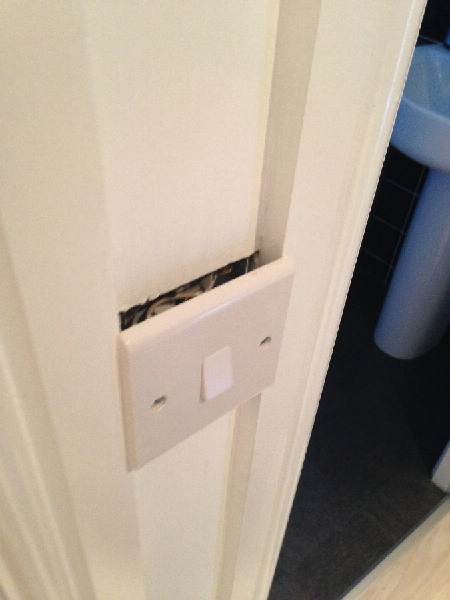
Even Victor Meldrew would have trouble with this defect! 

If this really is the case, how could a defect like this happen?
TW Snag Light SwitchEven worse, why was it not seen by anyone and corrected prior to legal completion?

“Every team has a dedicated Site Manager, who is responsible for making sure that your home is built to the highest possible standard.”

So how and why did this happen?
This defect was created at the first-fix stage. The door frame should have been packed off the wall nib using a timber stud to ensure the light switch would fit between the architraves later on. The light switch may even have been fitted in the wrong position altogether, at the very least the electrician should have noticed there could be an issue during his second-fix. The “dedicated site manager” didn’t check this stage of the build presumably!

Continue reading

Share this:
Share this page via Email Share this page via Stumble Upon Share this page via Digg this Share this page via Facebook Share this page via Twitter