Category Archives: New Homes

Latest new home news and views from the New Home Expert

House builders forced to hire bricklayers from Portugal on £1000 a week.

House builders are, according to yesterday’s  Daily Mail are being “forced” to hire bricklayers from Portugal on £1,000 a week because of a shortage of workers that are able to do the job.   According to recruiters, a shortage of skilled people in the UK is forcing firms to look abroad for construction workers, who can demand double the “usual” day rate.

But the influx of overseas tradesmen could actually be good for the industry. Most European workers are more polite, co operative and produce higher standards of work than British tradesmen. Many site managers would actually prefer a Lithuanian or Pole to many British workers!

P1000442James Hick, from the recruitment company Manpower, told the Daily Mail that building firms were looking for bricklayers in Portugal. He said: “There is a severe shortage of skilled tradespeople in Britain bricklayers, plumbers, electricians, mechanical engineers, HGV drivers.”

“Where they were paying £500 a week at the beginning of the year, the demand for those skills means they are now paying £1,000 a week. That pressure on skills is huge, particularly in the construction industry in the South East and London. During the downturn, he said, many firms stopped training schemes and were left without skilled workers when contracts started coming in. That is not something that can be resolved quickly, but companies need people who can work now, so they have had to put up pay and look elsewhere.”

Continue reading

Share this:
Share this page via Email Share this page via Stumble Upon Share this page via Digg this Share this page via Facebook Share this page via Twitter

A personal plea to Construction Minister Nick Boles

Dear Mr Boles,
You recently said that you regard house builders as the “unacceptable face of capitalism” after seeing first hand the shoddy workmanship of two house builders in your own constituency, adding housebuilders   “need to design beautiful places that respect the local environment, and they need to build houses to a high quality which will stand the test of time. If they don’t, I cannot and will not defend them.”

I have been campaigning for 8 years via my website www.brand-newhomes.co.uk and my blog www.new-home.blog.co.uk to make the public more aware of the poor quality and design of new homes and housebuilders’ poor and often non-existent after sales service.

Your government has done more for the house building industry than any other government and continues to be the “gift that keeps on giving”. Only this week, stamp duty was reformed. Whilst this is good news for the majority UK house buyers and very welcome, it is also particularly good news for housebuilders, now able to increase their prices even more now that stamp duty threshold ‘chokes’ have been removed. This follows the 20% discount on new homes for first-time buyers under 40, in addition to: NewBuy, FirstBuy and the biggest taxpayer subsidy of all: “Help to Buy” which has ‘helped’ house builders to record profit rises by increasing average selling prices by 20%. Furthermore, your government has relaxed planning rules, requirements to build affordable housing,  Section 106 obligations, Community Infrastructure Levy and the zero-carbon homes policy. There has never been a better time to be a major British home builder.  Ask, and ye shall receive!

If it was not for the dogged determination of Kirsty Burton and her neighbours, perhaps you would never have witnessed first hand the dire quality standards at a Persimmon estate in your constituency. You personally also discovered the complete contempt housebuilders have for anyone calling them to task over the quality of their homes and their indifference to dealing with defects in their customer’s homes. Quite frankly, if a government minister is unable to get a satisfactory response from Persimmon CEO Jeff Fairburn, what chance have the buyers of this company’s new homes?

But please do not make the mistake that this is a new phenomenon,  restricted to just one or two housebuilders on a handful of developments. It is a national epidemic!

Continue reading

Share this:
Share this page via Email Share this page via Stumble Upon Share this page via Digg this Share this page via Facebook Share this page via Twitter

Why a certain types of person buy new homes from particular housebuilders

Have you ever wondered what type of person buys a new home from particular house builders?

For a bit of fun at this time of year, we came up with the idea of trying to figure out the type of people who buy new homes – their personality, background, social class etc for each of the major house builders.

We already knew that new home buyers are generally people who cannot do DIY, that hate gardening, but like living with strangers looking at them watching television and have few possessions and small furniture!

We also already presumed that Persimmon home buyers would mostly comprise of Sun readers, gullible people who eat bad diets and vote on X factor. Who look for homes near a tattoo parlour, bookmaker, chip shop would be essential.

So this year we asked the gifted satirist “Ted Da Yonga” to come up with something. “Ted” is the author of the Mr Anthrop’s Blogspot “A tale of corporate greed, callousness and moral bankruptsy which started in reaction to an outrageous claim by Persimmon Homes and has since become a series of fictitious (mostly!) satirical stories based on real life situations facing the many buyers of new homes.

As with all Ted’s work please note it is satire – “this means it is for entertainment only and is not true. Mr Anthrop accepts no responsibility for the accuracy or otherwise of this information – it is all untrue. If you are a house developer reading this, well done –  ‘No child left behind’ is working!”

Continue reading

Share this:
Share this page via Email Share this page via Stumble Upon Share this page via Digg this Share this page via Facebook Share this page via Twitter

Taylor Wimpey CEO Peter Redfern suggests there is scope to increase prices of new homes even in a falling market!

The Daily Telegraph recently published a story featuring Taylor Wimpey CEO Peter Redfern claiming that new regulations following the Mortgage Market Review, which have restricted borrowing for second-hand homes, have not adversely impacted the business and Help to Buy is still being used by their first time buyers. The company also announced that it is fully sold for 2014 and has confirmed a profit upgrade.

Pete Redfern

Peter Redfern

Mr Redfern, in a somewhat blatant attempt to talk up the prospect of further  new home price increases, is claiming that housebuilders have more room to adjust prices upward since they were starting from a lower base, having fallen behind valuations for existing homes after the great recession. So are we to interpret that, housebuilders such as Taylor Wimpey have not increased their prices in line with the general local market since 2008?

He said:

“Housebuilders have to keep liquidity in the business and have more room for price adjustment sellers of existing homes by contrast may take their property off the market if they are not getting the right offer. Big houses in the country market are also proving harder to sell, where housebuilders are not that prevalent. This is having a negative impact on the outlook for the market for existing homes.”

Schemes, in particular Help to Buy, continue to give the new home industry a taxpayer-subsidised helping hand.   “………..attractive products that help credit availability and affordability – whereas stricter mortgage rules have started to affect sales in the second-hand market. After the downturn mortgage lenders penalised new build specifically apartments as they felt young buyers posed a greater risk with good incomes but low deposits, but these differences are starting to unwind.”

If new homes were penalised, it was because there is always  a 10-20% price premium. Lenders required higher deposits to give more of a buffer to account for the premium and added risk of steeper falls in valauations should the market turn.

Continue reading

Share this:
Share this page via Email Share this page via Stumble Upon Share this page via Digg this Share this page via Facebook Share this page via Twitter

Persimmon fail to fix defect in new home for 9 months

Buyer Cara Waligura reported a nasty smell emanating from the bathroom of her new Persimmon home soon after she moved into her new home on the South Shore estate opposite Blyth beach. But Persimmon failed to resolve the drainage problem until recently – nine months after it was first reported!

She told “Mr Justice” of the Evening Chronicle how Persimmon’s contractors left a “gaping hole” in the bathroom whilst trying to identify the source of the stench. She said: “Our new home stinks and so does Persimmon!”

Durgo

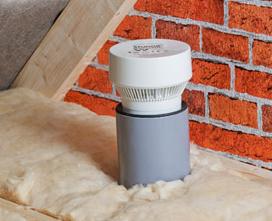
Defective “Durgo” was the cause

“Since moving into our newly-built home in January we have had to endure a horrible drainage smell in the bathroom. We are now nine months into complaining but we are getting no joy. After many calls and tears we still have a hole in the bathroom wall and an awful stink in all of the upstairs.”

Apparently even the NHBC issued three warnings to Persimmon to carry out work that is required under their Buildmark warranty.

John Eynon, deputy managing director for Persimmon Homes North East, told the Evening Chronicle: “This issue has been on-going for some time but time-scales have been agreed for it to be resolved.   I would stress that the design complied with building regulations and NHBC technical guidance at the time of occupation and was accepted by the NHBC.   Subsequent investigations and works to try and remove the smell have been ongoing and the final solution was agreed with the NHBC to vent the soil pipe to the atmosphere, in lieu of the durgo valve that had been fitted.  Unfortunately, there was a delay in completing the works due to organising suitable sub-contractors to minimise disruption.   We apologise that the problem was not quickly identifiable but the solution should resolve the matter now.   I have personally made several attempts to contact the customer whilst my customer care team have been dealing with the issue.”

Continue reading

Share this:
Share this page via Email Share this page via Stumble Upon Share this page via Digg this Share this page via Facebook Share this page via Twitter

First-time buyers under the age of 40 are to be offered 20% discounts on 100,000 new homes.

Ho Ho Ho! –  Christmas comes early for house builders as David Cameron is set to announce another extension of the Help to Buy scheme at his party’s conference in Birmingham this week. 

Help To Buy 3 jpgUnder the latest proposals, David Cameron anticipates that up to 100,000 houses would be built on so-called ‘brownfield’ land and offered for sale only to young people buying their first home in England. The new homes would be offered at discounted prices of 20% less than their market value.  Exactly who will be valuing the new homes and “comparable” homes has yet to be clarified, but it should be expected that the house builders would set the “market prices” and then “discount” them by 20%. So, in theory at least, a new house worth £200,000 could be bought by a first-time buyer under 40 for £160,000 with a potential saving of £40,000. 

To make the discount possible, the Conservatives are proposing to exempt house builders from certain taxes and requirements such as the Section 106 provision of affordable and social housing, the Community Infrastructure Levy and the Zero Carbon Homes Standard on these sites. In addition, brownfield sites – land previously used for commercial or industrial purposes – and surplus public sector land  will be released to house builders at knock-down prices to fund the discounting – savings which house builders will be “obliged” to pass on to buyers. 

OLYMPUS DIGITAL CAMERAHouse builders will be required to demonstrate, before planning approval is given, that the homes they are proposing to build will be at least a 20% cheaper than comparable houses in order to qualify for the discounted land and tax exemptions. That could mean that at the outset, the homes would have a price set before planning and could perhaps discourage house builders from land banking these sites. Brownfield land can be notoriously costly to develop. Previous industrial and commercial sites are often contaminated and the demolition and  clean up of toxins can be as time-consuming as it is expensive. Factor in that it will also be necessary to bring in clean topsoil and that costly foundation designs may also be required, it is not surprising that the house builder’s preference is always going to be Greenfield land. 

Continue reading

Share this:
Share this page via Email Share this page via Stumble Upon Share this page via Digg this Share this page via Facebook Share this page via Twitter

Redrow’s Steve Morgan – always moaning!

Steve MorganHardly a person to let an opportunity slip to gripe about the perceived failings of the planning process and other woes of the house building industry, Redrow’s CEO Steve Morgan, is becoming a regular whinger whenever his company release results or issue interim statements to the City.   His latest tirade this week concerned the release of greenbelt land for house building, capacity issues relating to labour and materials shortages and his perceived restrictive planning policies. 

Reasons to be cheerful?

Morgan’s company Redrow released a record set of results and doubled the dividend paid to its shareholders on the back of a 91% increase in profits to £132.6 million for the year to the end of June.  The average selling price of a Redrow home is also up 13% to £239,500 – the fifth highest of the large house builders.  The number of new homes built was also 27% higher, up 727 to 3,597. All of this thanks to the government’s Help to Buy scheme, acknowledged by Redrow and facilitating over a third of their private sales (35%). 

You would think this would make for a very happy bunny – especially when you consider that Morgan will be £3million richer as he owns 150 million shares in his company – but not apparently so. 

On brick shortages:

According to Morgan, there are just not enough bricks being made to go round. Strange, as his competitors Barratt managed to build 13,663 new homes, nearly four times more than Redrow and Taylor Wimpey also managed to get bricks for the 11,600 new homes they built last year, again over three times the number Redrow built! 

It takes around 10,000 bricks to build the average UK house.  Around 1,560 million bricks were made last year – enough for 156,000 new houses.  Nowhere near that number of houses will be built in 2014;   in fact, it would be a surprise if a total of 156,000 new homes are built this year!  So enough bricks are being made and Redrow’s competitors manage to order sufficient quantities so perhaps Morgan should be looking closer to home! 

Continue reading

Share this:
Share this page via Email Share this page via Stumble Upon Share this page via Digg this Share this page via Facebook Share this page via Twitter

Why are house builders and their agents still deliberately mislead buyers

New homes – all sugar and spice and all things nice?   That’s what the house builders would have you believe.  Slugs and snails and snagging list tales would be closer to the truth!  

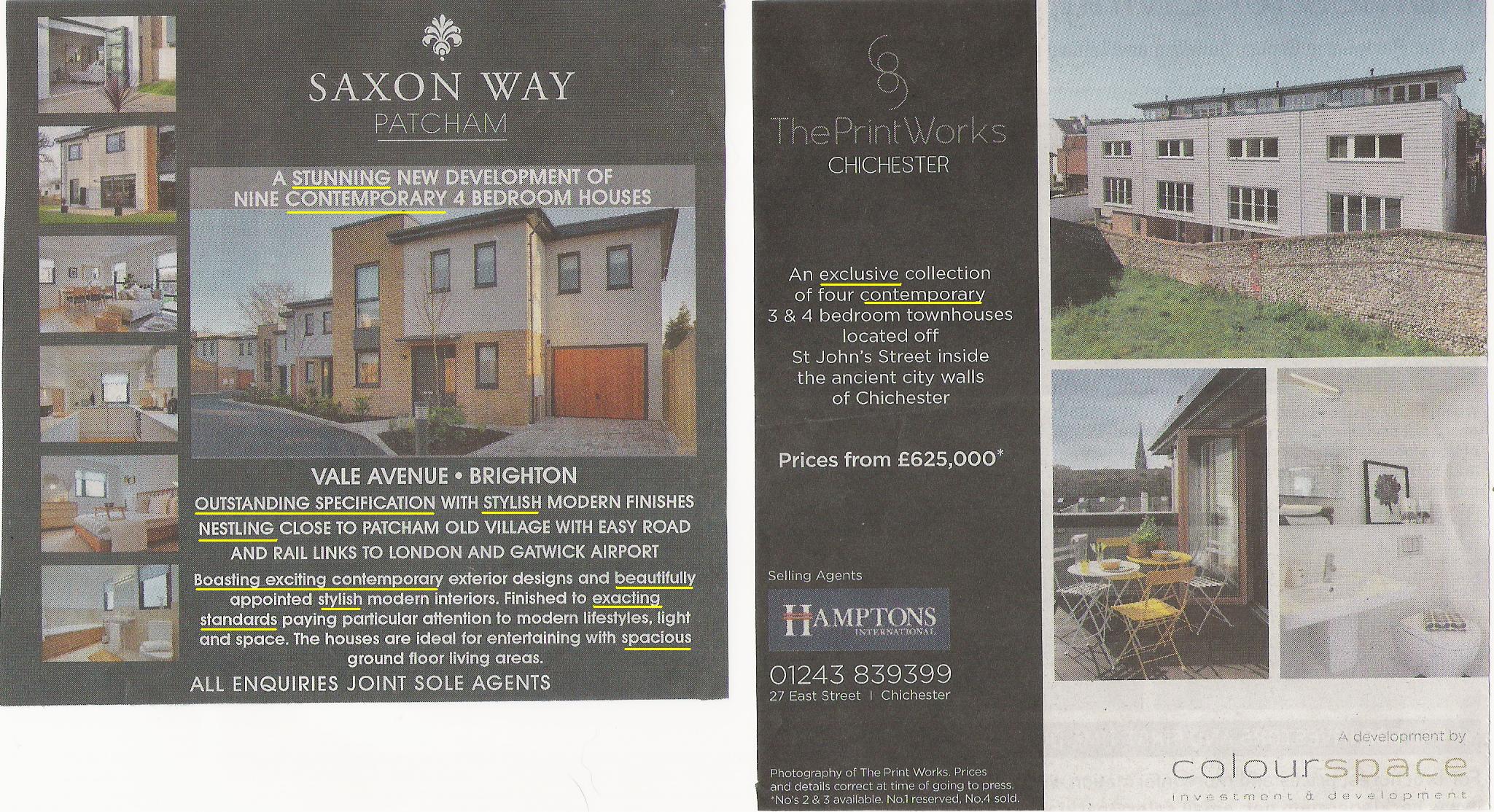
Included with last weekends Mail on Sunday was a property paper called ‘The Location’ described as – “44 pages of property inspiration.”   Within it’s covers were some of the most outrageous superlatives I have ever seen used by house builders and their selling agents to describe not only the new homes being advertised, but also the location of the developments.

 Builder ads 1

Not once were the adjectives used to describe the homes and developments backed up with any tangible statement of explanation.  Here is another translation of what the builders say and what it really means

Of the homes they were described as:

“Bespoke”  Implying that they are being built to a buyer’s own specific requirements rather than in all probability, a one-off design forced by the planning process.

“Contemporary”  This just means “of the same age; present-day” yet it is frequently used to imply state-of-the-art features, designs or specifications.

“Exclusive”  This commonly used to imply the development or properties are one of kind – hardly the case with most new homes.

“Uncompromised quality”  Really?  How is this substantiated?  So there we have it, this development does not “compromise” on quality, implying or more usefully, confirming that others do.  

Continue reading

Share this:
Share this page via Email Share this page via Stumble Upon Share this page via Digg this Share this page via Facebook Share this page via Twitter

Britain’s incredible shrinking new homes

The reduction in size of new homes being built in the UK has not gone unnoticed! In a recent issue of MoneyWeek, Merryn Somerset-Webb writes that the new homes currently being built are among the smallest in the world at an average of just 76 square metres, that’s 818square feet! In comparison the average UK house, excluding new builds, is 95.7sqm – 26% larger than a new build home today. How Britain’s new homes compare in size with other countries.

OLYMPUS DIGITAL CAMERAMerryn thinks that the problem isn’t that the average size of British homes is too small… “it’s the way we share them out – too many older single people in the bigger homes and too many families in the smaller ones”  as she would like to see capital gains tax extended for residential property.  Merryn does however agree that Britain’s new homes are… “generally small and nasty” and stating that new homes are… “getting bigger everywhere else in Europe except here and in Sweden”

Matthew Lynn also in MoneyWeek,  acknowledges that new homes are small and getting smaller.  Stating over time, “products get better and cheaper, our TVs are a lot bigger than they used to be and mobile phones can now do more than a desktop PC could just five years ago.” whereas “housing gets more expensive and worse.  An Englishman’s home is meant to be his castle – but increasingly it is his rabbit hutch. Last month a survey by Building research & Information found half of all British houses failed to meet the minimum recommended living space requirement.”   In any other industry you care to look at, overtime prices come down and quality improves, or a bit of both.  A survey by insurer LV also shows UK new homes are shrinking down by 2sqm in the last 10 years.  

So why are new homes so small?  This is where I believe Matthew Lynn misses the point.  He claims that it is because Britain has…“a chronic shortage of new homes” because… “the government refuses to make enough land available for new homes.”   Meaning that in… “crowded city centres existing houses get divided up into smaller units, while in the suburbs as many new homes as possible get crammed into whatever land is made available.”    Matthew’s “solution” is to increase the amount of land for development as it would result in holding back price rises and… “more importantly, it will mean better quality homes as well”   More land will not result in larger new homes. It will not mean the quality of new homes gets better either.  All it will do is increase profits for house builders as development land get cheaper. This is  why house builders will never build enough new homes.  

Continue reading

Share this:
Share this page via Email Share this page via Stumble Upon Share this page via Digg this Share this page via Facebook Share this page via Twitter

Buying a home without a full survey is a false economy.

According to The Mail on Sunday, four in every five buyers don’t bother with any home survey, let alone getting a  full survey.  This is despite the fact that if anything is found it can be used in negotiations to reduce the price.  Buying a home is undoubtedly the biggest single purchase most people make in their lifetime.  Get it wrong and it can be a mistake you could end up paying for during most of your lifetime!
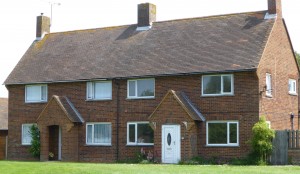
Council house 2

Get a survey done before making an offer

Compared with the other costs involved with buying a home, getting a full survey done is relatively small beer when compared to legal fees, stamp duty and mortgage arrangement fees.

There are four main types of survey available.

Valuation survey

This is carried out on behalf of the mortgage lender and is not a condition survey. Do not be fooled into thinking this will give you protection and piece of mind – it won’t! A valuation survey is just that, the lender is checking the property is “valued at” actually worth the price agreed, or at the very least the amount of the mortgage. Sometimes these surveys are done by just driving past the home being bought!

Condition report

This is the most basic survey. It should highlight problems regarding structural movement, damp and woodworm, but it is not thorough. It will indicate which areas need attention but not what specific repairs are required. No professional advice is given. Typically, a condition report costs around £300.

Homebuyer report

Whilst less expensive than a full structural survey, it does provide more detailed information than a condition report. The price should include professional support or further explanations from the surveyor after the inspection. However, in some cases any specific issues noted may be advised for further investigation, leaving both buyer and seller none the wiser without further specialist investigation. A homebuyer report costs from £400 to around £650.

Full structural survey (aka Building Survey)

This is the most comprehensive survey and is strongly recommended, especially for those buying very old, listed, or period properties. It will provide a detailed, technical report regarding the condition of the property, highlight any defects and give advice on possible solutions and repairs. However the full structural survey is the most expensive and can cost around £1,000. As with anything, you get what you pay for!

Snagging inspection survey

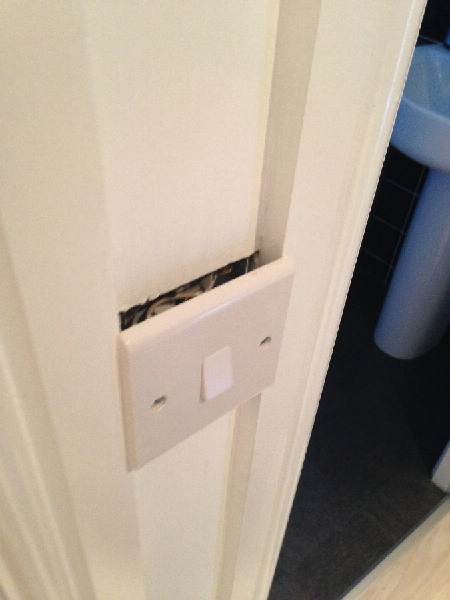
For those buying a brand new home, a snagging survey is an absolute must. There is no need for a detailed building survey as new homes come with a 10-year warranty. However, the quality of new homes is generally poor, attention to detail is often found lacking and it can be a complete nightmare trying to get any snagging defects rectified after you have moved in.
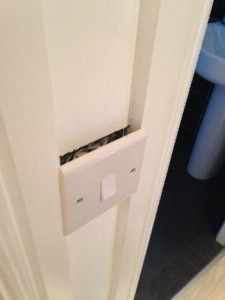
TW Snag Light Switch

Buying a new home doesn’t mean it will be problem free!

Let’s face it, once a house builder has your money what incentive do they have to fix problems quickly? It is no good thinking, “it is a new home with a warranty”  because 96% of new homeowners experience problems of one sort or other and getting them fixed is always a hassle.  The money spent on a professional snagging inspection will always be money well spent.  Compared to other surveys, they are relatively inexpensive too, typically costing from £250 to around £450 depending on the size of the home inspected. Some of the better snagging services include liaising with house builders and support after you move in too. Advice on choosing a snagging inspector.

Share this:
Share this page via Email Share this page via Stumble Upon Share this page via Digg this Share this page via Facebook Share this page via Twitter